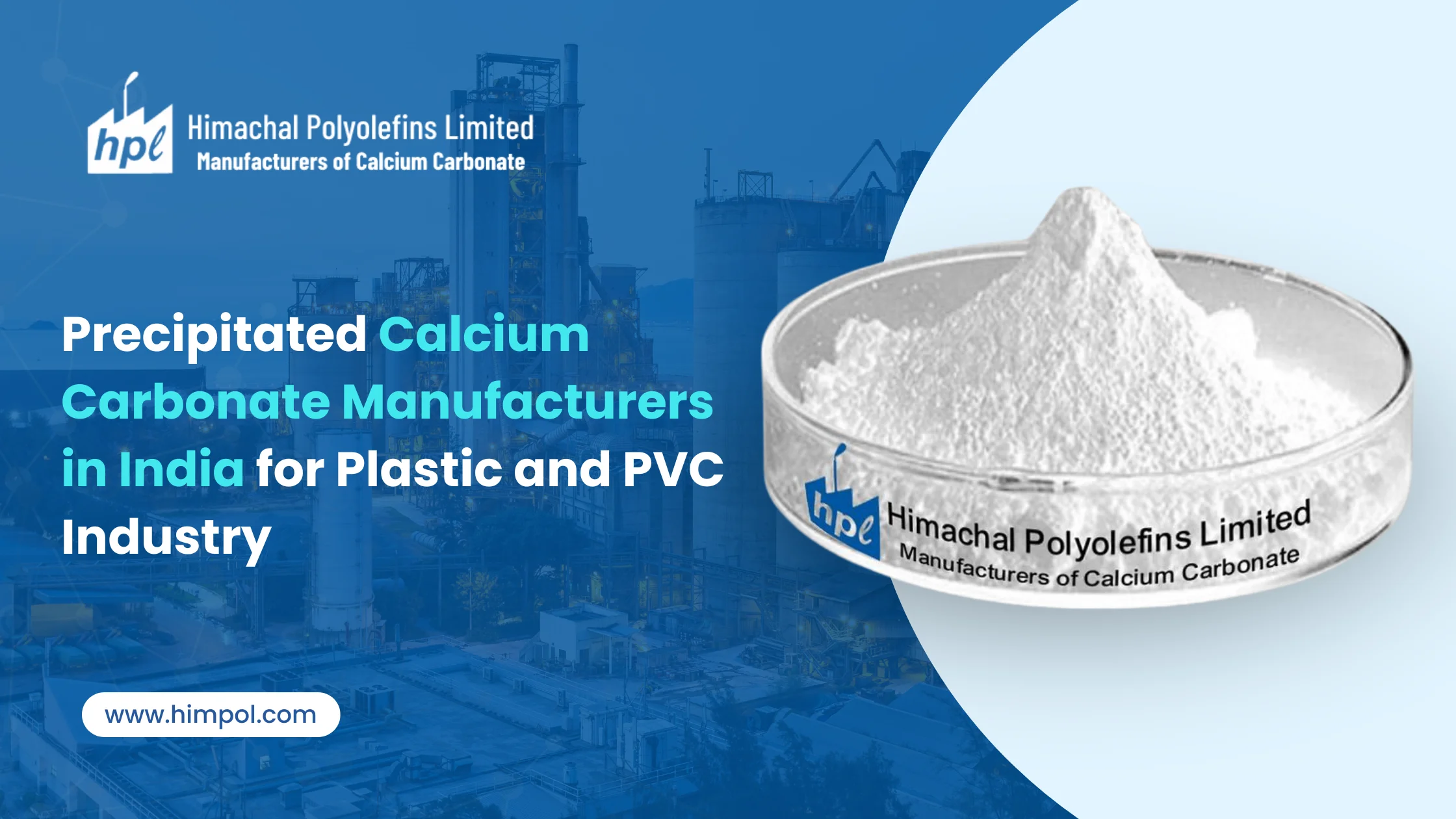
Precipitated Calcium Carbonate Manufacturers in India for Plastic and PVC Industry
Introduction: Why is Precipitated Calcium Carbonate Important for the Plastic and PVC Industry?
The plastic and PVC industries are evolving rapidly, and with that growth comes an increasing demand for high-quality, reliable raw materials. Precipitated calcium carbonate (PCC) is one such material that plays a critical role in these industries.
How do you ensure the product meets your exact requirements? How can you trust that the quality of the calcium carbonate won’t impact the final product? This guide will help you understand why precipitated calcium carbonate is so important for the plastic and PVC industry and why Himachal Polyolefins Limited is a great choice for sourcing this crucial ingredient in India.
Featured Snippet Section
Precipitated calcium carbonate (PCC) is a vital additive used in the plastic and PVC industries. It enhances product durability, improves texture, and lowers production costs. Leading manufacturers of calcium carbonate in India, like Himachal Polyolefins Limited, offer high-quality PCC for these industries.
What is Precipitated Calcium Carbonate (PCC)?
You might be wondering, “What exactly is PCC, and why is it so essential?” Well, precipitated calcium carbonate is a highly refined form of calcium carbonate made through a specific chemical process. It begins with quicklime (calcium oxide) reacting with carbon dioxide in water, creating a fine, uniform calcium carbonate powder.
For the plastic and PVC industries, the fine particle size and controlled production process make PCC an ideal filler.
Causes / Importance / Need of Precipitated Calcium Carbonate in the Plastic and PVC Industry
Why do manufacturers in the plastic and PVC industries rely on precipitated calcium carbonate? It’s simple: PCC offers a range of benefits that make it indispensable for producing high-quality products:
- Boosts Durability: PCC strengthens plastic and PVC products, making them more resilient and long-lasting.
- Cost-Effective: By using PCC as a filler, manufacturers can reduce the amount of expensive polymer needed, cutting down on production costs.
- Better Aesthetic Quality: PCC helps create a smoother, more polished surface for plastic products, which is essential for products that require a clean and sleek finish.
Mini Summary Box
Why is PCC Essential?
- Enhances product strength and durability
- Reduces costs
- Improves product appearance
- Eco-friendly
- Boosts manufacturing efficiency
How Does Precipitated Calcium Carbonate Work in the Plastic and PVC Industry?
You might be wondering, “How does this work in practice?” Let’s break it down:
- Particle Size Consistency: The uniformity of PCC’s fine particles ensures that it blends seamlessly into plastic compounds. This means your products will have consistent quality every time.
- Improved Flowability: When added to plastic formulations, PCC enhances the material’s flow, which makes molding and extrusion processes smoother and faster.
- Reinforcement: PCC strengthens plastic by providing added rigidity and toughness, which is especially important for products that need to withstand wear and tear.
- Filler Benefits: As a filler, PCC reduces the density of the plastic while maintaining strength, making products lighter and more affordable without sacrificing quality.
Mini Summary Box
How PCC Works
- Provides consistent particle size for better blending
- Improves flow and processing
- Strengthens plastic products
- Reduces plastic density
Benefits of Using Precipitated Calcium Carbonate in the Plastic and PVC Industry
So, why should you consider using PCC in your production process? Here are the key benefits:
- Stronger Products: PCC enhances the mechanical properties of plastics, ensuring that your products are tough and durable.
- Cost Reduction: By substituting expensive resins with PCC, manufacturers can save significantly on raw material costs.
- Smoother Surface Finish: The fine texture of PCC ensures that your plastic products have a high-quality finish, perfect for applications that require a polished look.
- Faster Production: PCC improves the flow properties of plastic during molding and extrusion, making the manufacturing process more efficient.
- Environmentally Friendly: As an all-natural product, PCC contributes to greener, more sustainable manufacturing practices.
Mini Summary Box
Key Benefits of PCC
- Increases product strength and durability
- Cost-effective alternative to expensive resins
- Enhances surface quality
- Speeds up production
- Eco-friendly and sustainable
Comparison with Alternatives
When it comes to fillers, there are several options available. Let’s compare PCC to other common alternatives used in the plastic and PVC industries:
| Filler Material | Cost Effectiveness | Strength Enhancement | Surface Finish | Environmental Impact |
|---|---|---|---|---|
| Precipitated Calcium Carbonate | Low | High | Smooth | Eco-friendly |
| Talc | Medium | Medium | Smooth | Non-biodegradable |
| Barium Sulfate | High | High | Rough | Non-biodegradable |
| Clay | Low | Low | Rough | Eco-friendly |
Mini Summary Box
Comparison Summary
- PCC offers the best balance of cost, strength, and environmental benefits compared to other fillers.
Who is a Good Candidate for Using Precipitated Calcium Carbonate?
Now that we’ve covered the benefits of PCC, who exactly needs it? Here are the industries and manufacturers that can take full advantage of PCC:
- Plastic Manufacturers: Whether it’s packaging, automotive components, or consumer goods, PCC enhances plastic strength and reduces costs.
- PVC Producers: Manufacturers of PVC pipes, profiles, and fittings can benefit from the added durability and performance that PCC provides.
- Packaging Industry: Companies using plastic for packaging can save on costs while maintaining high-quality products.
- Automotive Suppliers: PCC improves the durability and performance of plastic components used in vehicles.
- Rubber Manufacturers: While not as common, PCC is also used in rubber production to increase strength and processability.
Cost / Pricing Factors of Precipitated Calcium Carbonate
The price of precipitated calcium carbonate can vary depending on several factors:
- Purity: Higher purity PCC often costs more due to its refined production process.
- Particle Size: Finer particles require more processing and can increase the price.
- Volume: Purchasing in bulk can help lower the price per unit.
- Customization: If you need specific formulations for your industry, custom PCC grades may come at a premium.
Himachal Polyolefins Limited, a trusted, offers competitive prices for high-quality PCC, ensuring you get the best value for your investment.
Industry Trends in 2026
As we move into 2026, here are some trends shaping the future of the PCC industry, particularly in the plastic and PVC sectors:
- Eco-Friendly Manufacturing: There’s a growing push for sustainable manufacturing practices, and PCC fits right in as an eco-friendly filler option.
- Customization: More manufacturers are opting for customized PCC grades to meet specific performance requirements.
- Advanced Production Technologies: Innovations in the manufacturing process will lead to more cost-effective and efficient production of PCC.
- Global Demand: India’s calcium carbonate manufacturers are seeing growing interest not just locally, but globally, as demand for sustainable products rises.
Why Choose Himachal Polyolefins Limited in Mumbai?
When you’re looking for a reliable supplier of precipitated calcium carbonate in India, it’s important to partner with a brand that understands the unique needs of the plastic and PVC industries. Here’s why Himachal Polyolefins Limited is a top choice:
- Consistent Quality: We provide high-purity PCC with consistent properties to meet your exact specifications.
- Eco-Friendly Approach: We’re committed to sustainable practices, ensuring our products align with global eco-standards.
- Tailored Solutions: We can customize PCC formulations to meet the specific needs of your industry.
- Local Expertise: Based in Mumbai, we understand the unique demands of the local market and are equipped to deliver efficiently.
FAQs
- What is the difference between precipitated calcium carbonate and ground calcium carbonate?
- PCC is chemically refined for uniformity and purity, while GCC is naturally mined and ground with more variability in particle size.
- How does PCC enhance plastic products?
- PCC improves the strength, surface finish, and processing of plastic materials, making them more durable and cost-effective.
- Is PCC environmentally friendly?
- Yes, PCC is a natural, eco-friendly material, making it a sustainable choice for the plastic and PVC industries.
- What industries use precipitated calcium carbonate?
- PCC is widely used in plastics, PVC, paints, rubber, and even in pharmaceutical and cosmetic formulations.
- How do I choose the best PCC manufacturer in India?
- Look for manufacturers that offer high-quality products, competitive pricing, and customized solutions to meet your specific industry needs.
Strong CTA
Looking for High-Quality PCC for Your Plastic and PVC Products?
Partner with Himachal Polyolefins Limited, . Get in touch with us today to learn more about our precipitated calcium carbonate products and how we can help enhance your manufacturing process.