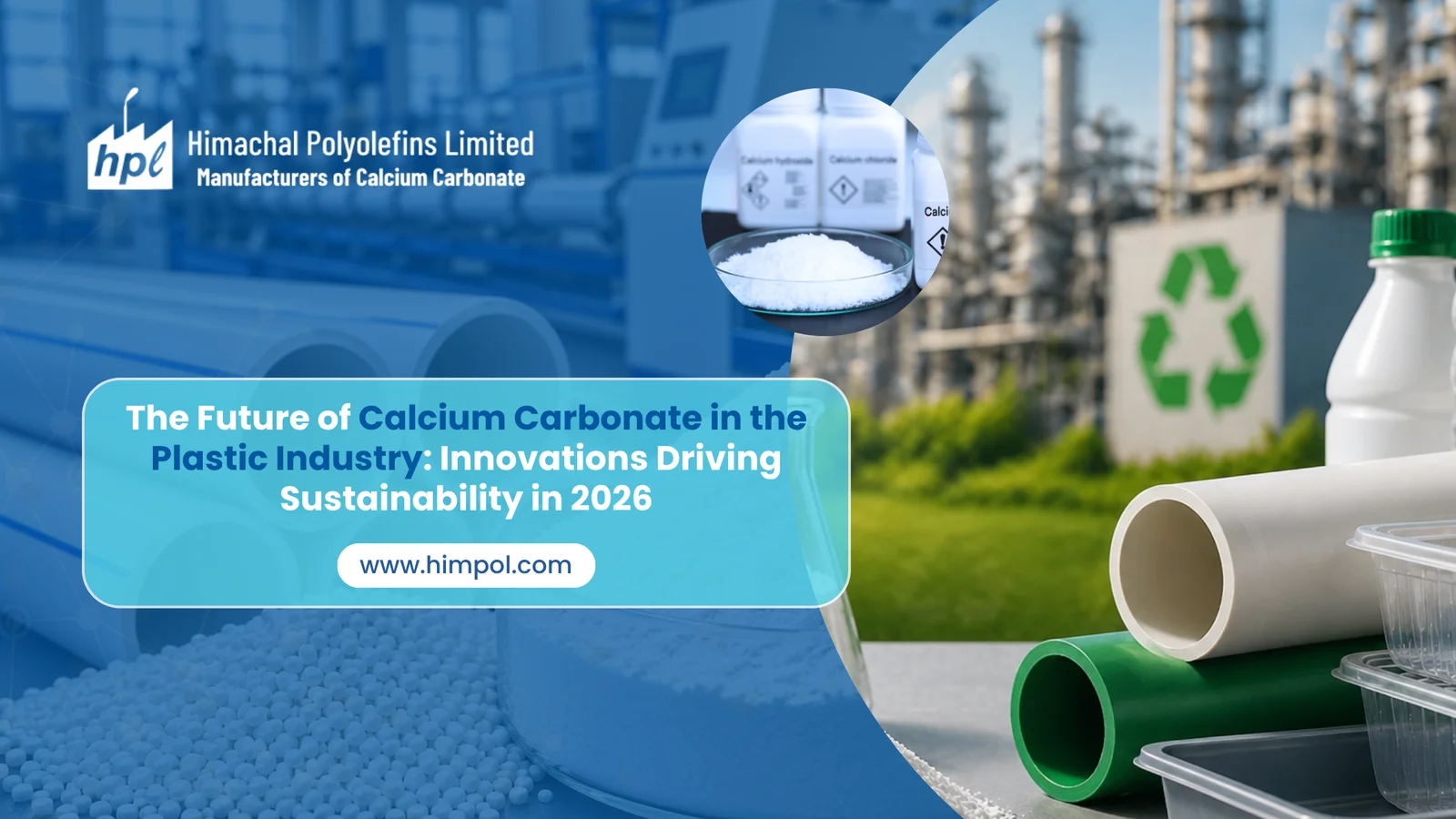
As the world moves towards a greener future, sustainability in plastic manufacturing has become a key priority for industries worldwide. But how exactly does this mineral contribute to sustainable practices in the plastic industry? And what does the future hold for calcium carbonate in this sector?
In this blog, we’ll explore the impact of calcium carbonate for plastic industry production, how it’s driving sustainability in 2026, and why companies like Himachal Polyolefins Limited (Himpol), a leading manufacturer of calcium carbonate in Mumbai & India, are investing in its use for eco-friendly plastic production.
Calcium carbonate is transforming the plastic industry by serving as a sustainable filler material, improving the durability and performance of plastic products while reducing environmental impact.
What is Calcium Carbonate in the Plastic Industry?
By adding calcium carbonate, manufacturers can improve the strength, durability, and appearance of the final plastic product while reducing costs.
Calcium carbonate is a key material in plastic production, enhancing performance and supporting sustainability by acting as a filler in a variety of plastic products.
Causes / Importance / Need for Calcium Carbonate in Plastic Manufacturing
The demand for sustainable plastic solutions is growing. Here’s why calcium carbonate is becoming a go-to option in the plastic industry:
- Eco-friendly: Calcium carbonate is an abundant, naturally occurring mineral, making it a sustainable alternative to petroleum-based additives.
- Cost-effective: It helps reduce the overall cost of plastic production by replacing more expensive materials without compromising on quality.
- Enhanced properties: It improves the mechanical properties of plastic, including its rigidity, strength, and durability.
- Better environmental footprint: Using calcium carbonate helps decrease the environmental impact of plastic production, contributing to a circular economy.
Calcium carbonate is vital for sustainability in the plastic industry, offering an eco-friendly, cost-effective solution while enhancing the properties of plastic products.
How Does Calcium Carbonate Work in Plastic Manufacturing?

Here’s a step-by-step breakdown of how calcium carbonate is used in plastic production:
- Raw Material Selection: High-quality calcium carbonate is selected, often in its precipitated form (PCC), to ensure optimal particle size and consistency.
- Blending with Plastic: The calcium carbonate is mixed with plastics such as PVC, polyethylene, or polypropylene during the extrusion or molding process.
- Filling and Enhancing: Calcium carbonate acts as a filler, improving the strength and durability of the plastic without increasing production costs.
- Processing: The blended mixture is then processed through injection molding or extrusion to create a wide range of plastic products.
- Final Product Quality: The result is a plastic product that benefits from improved physical properties, like strength and impact resistance, while being more environmentally friendly.
Calcium carbonate is integrated into plastic manufacturing through a straightforward process, where it enhances product durability and reduces costs without sacrificing quality.
Benefits of Calcium Carbonate in Plastic Production

Using calcium carbonate in plastic manufacturing offers several key advantages:
- Cost Savings: By using calcium carbonate as a filler, manufacturers reduce the need for more expensive raw materials.
- Improved Durability: Plastics with calcium carbonate have enhanced strength, wear resistance, and longevity.
- Sustainability: Calcium carbonate helps make plastic production more eco-friendly by reducing reliance on petroleum-based materials.
- Better Processing: The addition of calcium carbonate can improve the flow of plastic during processing, making production more efficient.
- Aesthetic Improvement: It enhances the whiteness and surface finish of plastic products, making them more visually appealing.
The inclusion of calcium carbonate in plastic manufacturing leads to cost savings, better performance, and a more sustainable production process.
Comparison with Alternatives
| Material | Calcium Carbonate | Talc | Clay |
|---|---|---|---|
| Cost | Lower | Higher | Moderate |
| Durability | High | Moderate | Low |
| Sustainability | Eco-friendly | Less eco-friendly | Moderate |
| Impact on Performance | Improves strength | Softens product | Can reduce strength |
Calcium carbonate stands out for its cost-effectiveness, sustainability, and ability to improve plastic product performance when compared to alternative fillers.
Who Needs Calcium Carbonate for Plastic Manufacturing?
The following industries are ideal candidates for using calcium carbonate in plastic manufacturing:
- Plastic Manufacturers: Companies producing PVC pipes, profiles, and other plastic products.
- Packaging Industry: Manufacturers of plastic packaging products that require high strength and durability.
- Automotive Industry: Companies producing plastic components for vehicles, where strength and durability are essential.
- Construction Industry: Producers of plastic components used in building and infrastructure, where long-lasting materials are necessary.
- Consumer Goods Manufacturers: Companies producing items like plastic containers, furniture, and toys.
Calcium carbonate is widely used by industries like packaging, automotive, construction, and consumer goods to improve the performance and cost-efficiency of plastic products.
Industry Trends in 2026
As we look to 2026, the role of calcium carbonate in the plastic industry will continue to evolve with the following trends:
- Increased Use of Sustainable Fillers: Companies will continue to embrace calcium carbonate as an eco-friendly alternative to traditional fillers.
- Advancements in Precipitated Calcium Carbonate: Innovations in PCC will drive improvements in plastic product performance and manufacturing efficiency.
- Focus on Circular Economy: The plastic industry will see greater use of recycled materials and sustainable processes, with calcium carbonate playing a key role.
- Enhanced Product Performance: As the demand for high-performance plastics grows, the ability of calcium carbonate to improve strength and durability will become more crucial.
By 2026, we expect to see further advancements in the use of calcium carbonate for sustainable plastic production, with innovations improving product performance and environmental impact.
Why Choose Himachal Polyolefins Limited (Himpol) in Mumbai?
As a trusted manufacturer of calcium carbonate in India, Himachal Polyolefins Limited (Himpol) offers high-quality, eco-friendly calcium carbonate products designed to meet the specific needs of the plastic industry. Our products:
- Meet Industry Standards: We provide calcium carbonate with precise particle size distribution, ensuring optimal performance in plastic applications.
- Sustainability Focus: We are committed to reducing the environmental footprint of our products and operations.
- Competitive Pricing: Our cost-effective products help manufacturers reduce production costs without compromising on quality.
Himachal Polyolefins Limited (Himpol) is the ideal choice for high-quality, eco-friendly calcium carbonate, providing products that help enhance plastic manufacturing while maintaining sustainability.
FAQs
1. How does calcium carbonate improve plastic quality?
Calcium carbonate enhances the strength, durability, and surface finish of plastic products, making them more robust and aesthetically appealing.
2. Is calcium carbonate eco-friendly for plastic production?
Yes, calcium carbonate is a naturally occurring mineral that is widely used as a sustainable alternative to petroleum-based materials in plastic manufacturing.
3. What types of plastic products use calcium carbonate?
Calcium carbonate is commonly used in PVC polyethylene and polypropylene products including pipes packaging and automotive components.
4. Why should I choose calcium carbonate over other fillers?
Calcium carbonate is more cost-effective, eco-friendly, and provides superior durability compared to alternative fillers like talc or clay.
5. How will calcium carbonate impact the plastic industry in 2026?
In 2026, calcium carbonate will continue to drive sustainability and cost-effectiveness in plastic manufacturing, with innovations improving product performance and environmental impact.
If you’re looking to enhance the sustainability and performance of your plastic products consider using high-quality calcium carbonate from Himachal Polyolefins Limited (Himpol). Contact us today to learn more about our eco-friendly solutions and how we can help your business thrive in the plastic industry.